When I called my family to tell them I had breast cancer, I was shaking so badly I could barely hold my phone. I thought my mom would panic, or at least ask if I was okay. Instead, she sounded annoyed. “We’re in the middle of your cousin’s bridal shower. Can this wait?” she said. I remember staring at the wall after she hung up, feeling like something inside me had just snapped. That was the moment I realized I was going to go through this alone. And I did. Every chemo session, every sleepless night, every moment I felt like my body was giving up on me—I faced it without them. No calls, no visits, no messages asking if I was still alive. The only person who never left my side was my six-year-old son. He didn’t fully understand what cancer was, but he knew I was hurting, and he tried to be strong for me in ways no child ever should have to.
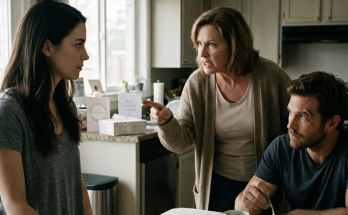
Months later, when I was still weak and recovering, there was a knock on my door. I opened it and saw my mom, my sister, and my aunt standing there like nothing had ever happened. They were smiling, acting warm, like we were a normal family again. For a split second, I thought maybe they had come to apologize. Maybe they had finally realized what they had done. But then my sister pulled out a stack of papers and said, “We need a favor. I’m getting a car, but my credit isn’t good enough. Can you co-sign for me?” I just stared at her, not even sure I had heard her right. After everything… after they disappeared when I needed them the most… this was why they came back?
Before I could respond, my son walked into the room holding a folded piece of paper. He looked up at me, then at them, and said quietly, “Mommy said to give you this if you ever came asking for money.” I had written that note weeks earlier, during one of my lowest nights, when the loneliness and pain had become too much. I didn’t know if I would ever use it, but something in me told me I might need it one day. My sister smirked as she took it, clearly expecting something small, maybe even an agreement. But as she read, her expression changed. The room went completely silent.
The note said, “To the family who couldn’t answer my call when I said I had cancer—don’t expect me to answer yours when you need something. My illness showed me exactly who was there for me and who wasn’t. I survived without you. I will continue to live without you. Please don’t come back unless it’s to apologize, not to ask.” By the time she finished, the smile was gone from her face. My mom looked like she wanted to say something, but no words came out. For once, they had nothing to say.
I gently took the papers from my sister’s hand and placed them back against her chest. “I can’t help you,” I said calmly. Not angrily. Not bitterly. Just done. They stood there for a moment longer, uncomfortable, exposed, and then one by one, they turned and walked away. My son reached for my hand, and I squeezed it, feeling a kind of strength I hadn’t felt in a long time. Cancer took a lot from me, but it also gave me something I never had before—the clarity to see who truly mattered. And as I closed the door behind them, I realized I wasn’t alone anymore. I had my son, and I had myself. And for the first time, that was enough.