The first message I saw lasted less than three seconds.
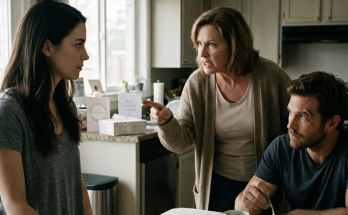
My daughter, Emma, had left her phone on the kitchen counter while she ran upstairs to grab her backpack.
The screen lit up.
“I’m proud of you. You don’t have to carry this alone anymore.”
It wasn’t the words that unsettled me.
It was the name.
Michael.
No last name.
No profile picture.
Just a gray circle.
Emma was eighteen.
Michael, from what little I could tell, was much older.
When she came back downstairs, she snatched up her phone so quickly it made my heart sink.
“Who’s Michael?” I asked.
“No one.”
“You seem to text him a lot.”
“It’s private, Dad.”
She walked out the door before I could say another word.
Over the next several weeks, everything changed.
She smiled at her phone late at night.
She started locking her bedroom door.
She took long walks while talking quietly on the phone.
Whenever I entered the room, she’d lock the screen immediately.
I told my wife, Laura, what I’d noticed.
She shrugged.
“She’s eighteen.”
“She’s entitled to some privacy.”
“What if she’s talking to someone dangerous?”
Laura sighed.
“I think you’re imagining the worst.”
Maybe she was right.
I wanted to believe she was.
But something about Emma’s behavior didn’t feel like a normal first romance.
It felt… heavier.
One evening, I overheard her crying in her room.
“I don’t know if I can tell him,” she whispered into the phone.
A man’s calm voice answered through the speaker.
“You’ll know when you’re ready.”
I couldn’t hear anything else.
That night, I barely slept.
The next morning, I quietly checked our phone bill.
Most of the calls were to the same number.
After hours of searching public records, I found an address.
The man lived about forty minutes away.
I didn’t tell my wife where I was going.
I simply got in my truck.
The entire drive, I rehearsed what I would say.
Stay away from my daughter.
If you contact her again, I’ll call the police.
I parked outside a modest blue house.
The lawn was neatly trimmed.
Wind chimes hung on the porch.
Nothing looked suspicious.
I knocked.
A man in his late fifties answered.
Gray hair.
Kind eyes.
He looked more like a high school teacher than the villain I’d imagined.
“You must be Emma’s father,” he said quietly.
My stomach tightened.
“You know who I am?”
“I’ve been expecting you.”
Every instinct told me to leave.
Instead, I stepped inside.
The house was simple.
Bookshelves lined the living room.
Family photographs covered one wall.
Then I saw the picture.
It stopped me cold.
Framed beside the fireplace was an old photograph of a young woman.
She looked almost exactly like Emma.
The same smile.
The same eyes.
The same dimple on her left cheek.
I whispered,
“…Who is she?”
His expression softened.
“My daughter.”
I looked back at the picture.
“She died nine years ago.”
The room went silent.
He gestured toward the couch.
“Please sit down.”
Against my better judgment, I did.
He took a deep breath.
“Emma found my blog about grieving parents.”
I frowned.
“What blog?”
He showed me his laptop.
For years, he had written about losing his daughter to a rare illness.
The blog had grown into an online support community for families dealing with grief, anxiety, and depression.
Then he opened an email.
The sender was Emma.
The first message had been sent almost a year earlier.
It read:
Hi. I don’t know who else to talk to. My dad thinks I have to be strong all the time, but I’m scared about my future.
He looked at me.
“She wasn’t looking for a relationship.”
“She was looking for someone who had survived losing someone they loved.”
I felt my face grow warm.
“Losing who?”
He hesitated.
Then he handed me another printed page.
It was a letter Emma had written but never sent.
She had been terrified ever since my younger brother died in a car accident two years earlier.
She never processed the grief.
She was afraid that if she admitted how broken she felt, she’d become another burden to our family.
She wrote that I always tried to fix problems instead of listening to feelings.
Reading those words hurt more than I expected.
“I never encouraged her to hide this from you,” Michael said gently.
“I told her many times that healing works best when family is involved.”
“Then why didn’t she tell us?”
“Because she was afraid.”
“Of what?”
“That you’d mistake her pain for weakness.”
I didn’t know what to say.
A few minutes later, the front door opened.
Emma walked in.
She froze when she saw me.
“Dad?”
“I… followed the address.”
Tears filled her eyes.
“I’m sorry.”
“No,” I said quietly.
“I’m the one who’s sorry.”
For the first time in months, we talked honestly.
Not about secret messages.
Not about rules.
About grief.
Fear.
The pressure she’d been carrying alone.
When we got home that evening, Laura wrapped Emma in the longest hug I’d ever seen.
The three of us later found a licensed family therapist and began attending sessions together.
Slowly, our conversations changed.
Instead of asking, “What’s wrong?”
We started asking, “How are you really doing?”
Months later, Emma showed me the first message Michael had ever sent her.
It simply said:
You deserve people who will listen before they judge.
I realized then that I had almost let fear convince me I already knew the whole story.
I had driven to that house expecting to rescue my daughter from a dangerous stranger.
Instead, I found a grieving father who had helped my daughter survive one of the hardest seasons of her life.
Sometimes the thing we fear most isn’t what’s hiding behind a locked screen.
Sometimes it’s the painful conversation waiting inside our own home.
And once we finally have it…
We discover that understanding can accomplish what suspicion never could.